Technology, Tile & Art
This was a very Merry Christmas story to learn about a few different ways that technology has grown to help encourage the appeal for art and give artists extra exposure. Since I’m in a similar start up business of artistic innovation, I was happy to read about these concepts gaining ground.
I first read about the start up Artaic in the Boston Globe, where artwork can be turned into mosaic tile through software and robotics in half the time to create manually. Anyone can have a custom mosaic tile mural where ever they want. How fantastic!
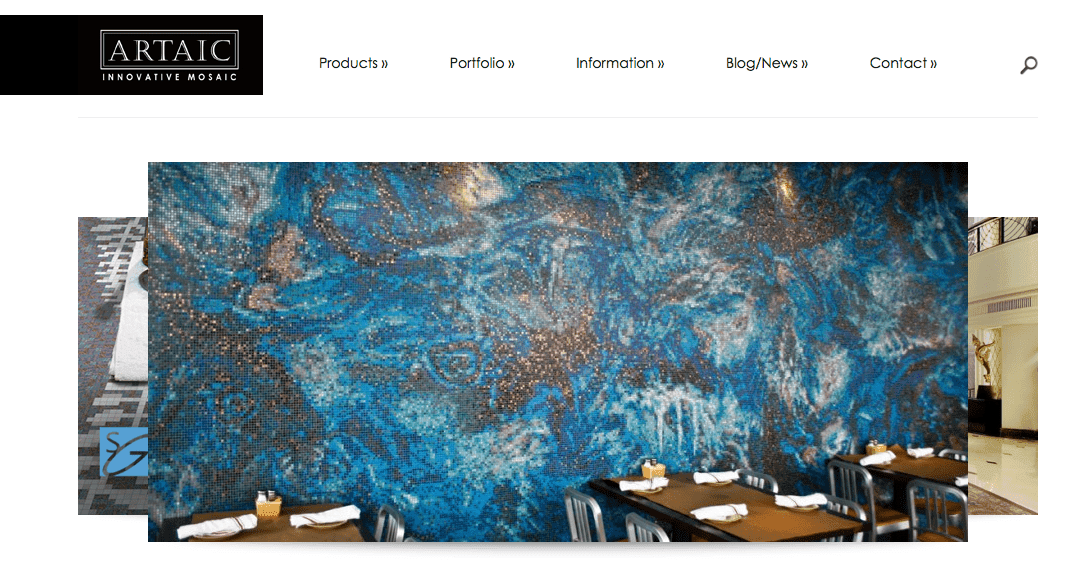
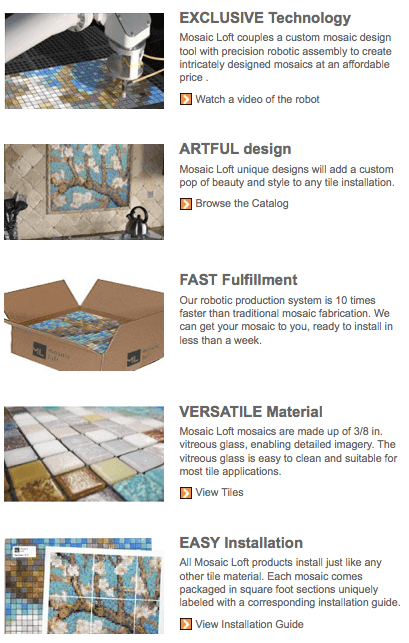
This is a similar idea to Home Depot’s own Mosaic Loft, which I didn’t even know existed. They have partnered with Artaic to offer both concepts of stock designs as well as custom capability. With a large, well known company backing the idea of turning mostly photographs into mosaic tiles, you would think they would do more to promote, but according to this story it hasn’t quite taken off yet. Somehow the photo loses its affect once turned into a mosaic, whereas if it was more a fluid artistic or abstract / graphic design piece, it may have more appeal — as in Artaic’s work. Custom tile of course, is three times more expensive but than typical, plain tile sold at the home improvement store. Mosaic Loft shows their creative process using robotic technology in the pictures below.
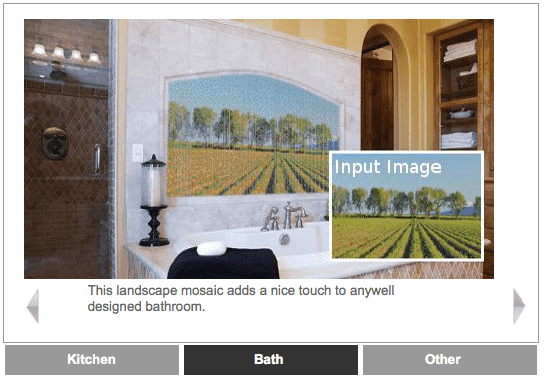
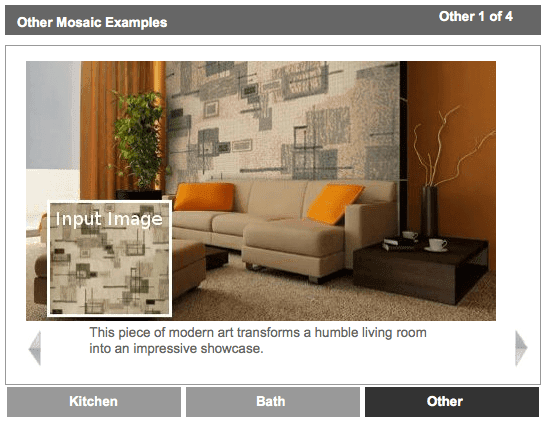
Either way, I like the innovative idea of using mosaic tile for more than your typical backsplash. You can see our Casart Faux Glass Mosaic Tile here and on our Gallery page. I also like the idea of co-creating a product and making it more custom. The only problem with tile in general is that it is permanent; whereas Casart wallcoverings can be temporary or the option of being long term and remain removable and reusable. My theory is that there is so much homogeneity that pretty soon everything will have custom capability. Artaic’s owner, Ted Acworth states, “We believe that there is a $10 billion or $15 billion market of people who would want something other than plain tile on a bathroom wall, or a basic pattern.”
There are other innovative ways some other startups are bringing solutions with the artist and art in mind.
ArtVenue allows businesses to select artwork that is submitted by artists on their website and have that artwork be available for sale at their venue through a QR code that is displayed with a placard for the artwork. This is particularly appealing for restaurants and commercial properties looking to fill their walls and change out their venue’s artwork regularly while the artists get paid and exposure for the placement. 70% of the proceeds go to the artists, the venue gets 20% and ArtVenue gets 10% for the facilitation. Too bad this is only located in Boston. I can see this win-win concept spreading nation wide.
TurningArt allows you to rent or buy artwork for your home or office. Their objective is to get more art on walls. They may become the next Netflix of the Art Generation. For a $10 monthly subscription, you can rotate your art by rolling up your piece and sending it back in exchange for a new piece which fits within a standard frame that the company provides. Your subscription gives you credits that can in turn help when you want to actually purchase a painting. So far they are representing “the best new emerging artists” in these regions: Boston, New York, Los Angeles, San Francisco, Portand, Chicago, Seattle, & Philadelphia. Look for them soon in your neighboring town but you don’t have to reside there to get a subscription.
TourSphere just launched this past October and has already made strides to offer museums and other venues software to “build digital guides” that optimize viewing for their collections on mobile devices. About 20 museums are already building their collections with TourShere’s software any artistic venue can do the same at $399 a month to create and launch a web app instantly. A free app will soon be available to all of us to view them.
What I find fascinating about all of these startup companies is that they have found a way to use technology to make art more available and bridge the divide with lack of accessibility or just inability. They make all forms of creativity a reality and that’s pretty inspirational at Christmastime to know that magical dreams like these capabilities can really come true.

casart
I'm an artist, wife and mother of two boys. I started my illustration business, The Occasional Palette over 35 years ago, when my oldest son was an infant. Once my children were in school, I began painting decorative, faux finishes and murals through my second business, Casart, now over 30 years old. My third business, Casart Coverings, is a springboard from my second. Click on the link on the sidebar to see innovative, custom, designer wallcovering, removable and reusable wallpaper and coordinating decor.