Save The Caves
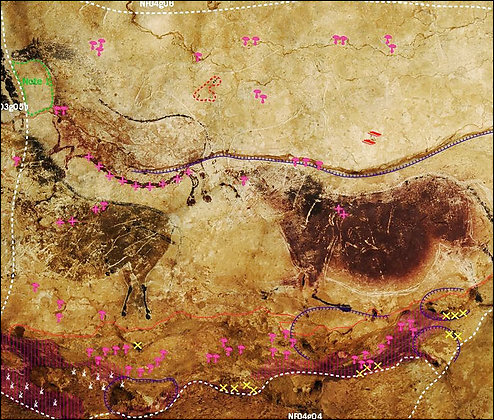
Lascaux’s earliest example of prehistoric cave art is being threatened by creeping black mold. Molly Moore’s article in the Washington Post describes how past preventions, such as a formaldehyde wash used to disinfect visitors’ feet has also eradicated the friendly organisms that would have killed and kept the mold in check. So far the spreading of the black spot has been stopped by spraying an ammonia based solution but human access and exposure to the elements may also be causing the problem. Whatever is the solution, these caves and their art should be saved. They cannot be replaced and it would be a grave loss to lose the original art.
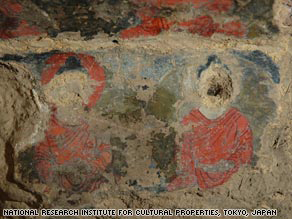
On a side note, surprisingly, although much later than the prehistoric art of Lascaux, the earliest oil paintings were discovered recently in caves in Bamiyan, Afghanistan, painted in the mid 7th and 10th centuries — 800 years before European oil painting began. These lack the abstract simplicity of Lascaux’s art and there is even less access available to view them.
Maybe there is a similar technology discovered in Copenhagen for preserving murals painted on Medieval brick that could be used to salvage these cave examples. Maybe the electricity used to push out the salt in the substrate could be used to eradicate the black spot in Lascaux? Science and technology can help art.

casart
I'm an artist, wife and mother of two boys. I started my illustration business, The Occasional Palette over 35 years ago, when my oldest son was an infant. Once my children were in school, I began painting decorative, faux finishes and murals through my second business, Casart, now over 30 years old. My third business, Casart Coverings, is a springboard from my second. Click on the link on the sidebar to see innovative, custom, designer wallcovering, removable and reusable wallpaper and coordinating decor.


