Murals, Mosaics and Materials Marry
I’m always taken by murals that have an illustrative quality and tell a story. I’m even more taken when a village had been built around them and materials have been used in unusual ways.
Toronto’s Village of Islington is built around 15,000 square feet of “historically pictorial” murals. Each mural tells a story and depicts an age-gone-by time period. These are both endearing and well-executed educational stories in paint. They were conceived by the BIA, Business Improvement Area to beautify and promote Islington Village. They’ve done a fabulous job, worth me traveling to see when I’m able to take that trip that I’ve been wanting to to Canada. Just look at the horse coming out from the corner of the two buildings.
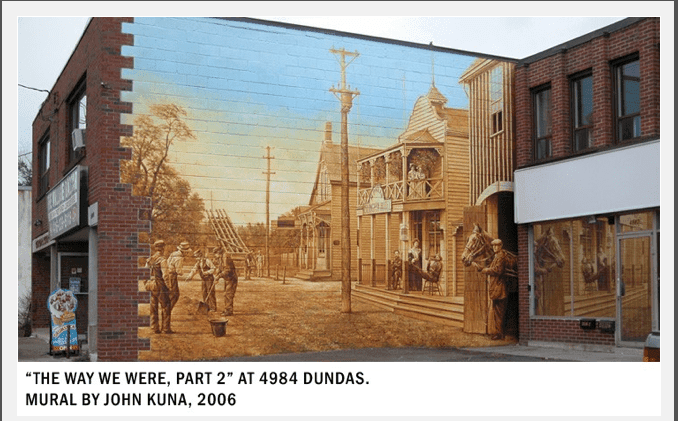
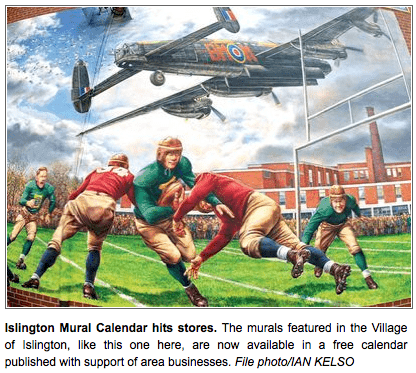
The murals are so popular here that they have now been printed in calendar form.
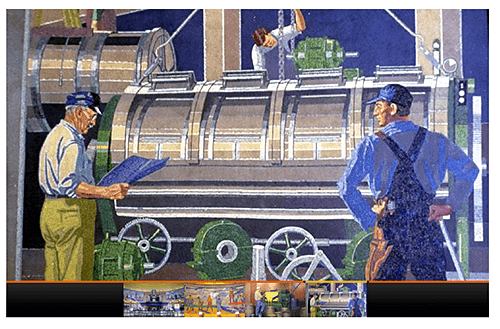
Similar in style to these murals are ones by German-born artist Winold Reiss, who was commissioned to create mosaic murals for the Cincinnati Union Terminal, which now houses the Omnimax Theater. It’s hard to believe that these are all mosaics — until you look closely. Each mural is 105 feet long and depicts industries that were important to Cincinnati at the time, such as Baldwin Piano, Proctor & Gamble and US Playing Cards (who knew).

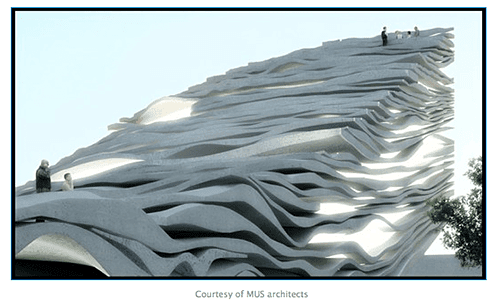
After seeing these, I started thinking about how mosaics and building materials can be used beyond their regular function to make such majestic artwork. What about this building below – amazing?! It’s the ISMOF – International School Museum of Flamenco in Jerez, Spain. Doesn’t it just look like the folds in a Flamenco Dancer’s Dress as she’s whipping it from side to side while you can just hear the clapping and applause. This design is 58% complete. Go to Archello for more incredible examples of architecture and design.
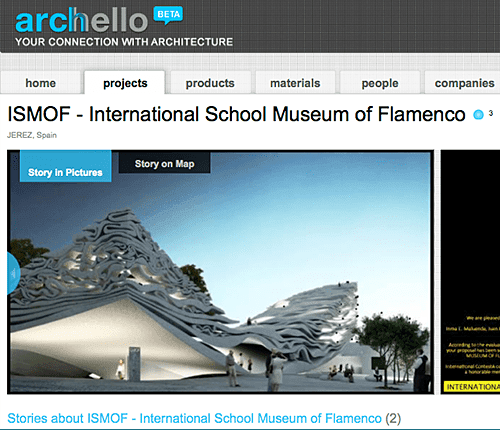
There’s even more detail on Arch Daily (also on my sidebar). How cool it would be to be able to walk a mountain of architectural folds.
I’m in High Point Market at the time this post runs, so I’m right in the middle of seeing home furnishing design prototypes for next year. It’s exciting to see what new innovation will be next and new ways to use materials. Already these are inspiring.

casart
I'm an artist, wife and mother of two boys. I started my illustration business, The Occasional Palette over 35 years ago, when my oldest son was an infant. Once my children were in school, I began painting decorative, faux finishes and murals through my second business, Casart, now over 30 years old. My third business, Casart Coverings, is a springboard from my second. Click on the link on the sidebar to see innovative, custom, designer wallcovering, removable and reusable wallpaper and coordinating decor.


